Cost-Aware AI Engineering: Pinpointing Your Bill's True Drivers
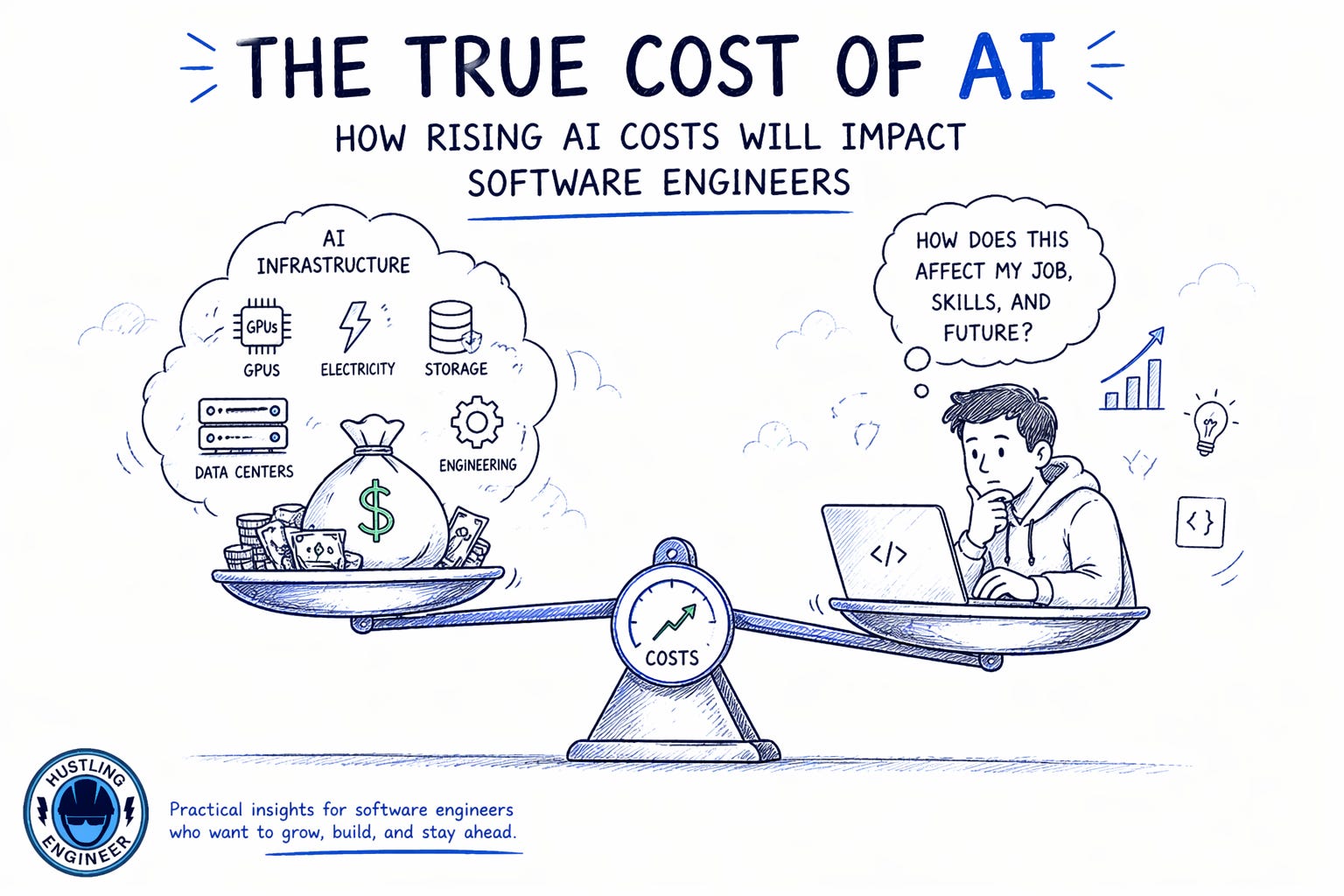
Running AI models promises transformative insights, but the infrastructure to train, deploy, and serve them often comes with a hefty, unpredictable price tag. Understanding what truly drives your AI bill is the first step toward sustainable innovation.
AI projects can quickly spiral into significant expenditures if not managed proactively. While the allure of powerful models is strong, the hidden costs of compute, data, and services can silently erode budgets, making even successful projects financially unsustainable. Identifying these cost centers is paramount for any AI team aiming for both impact and efficiency.
The Usual Suspects: What Inflates Your AI Bill?
Several factors consistently contribute to the bulk of AI-related infrastructure costs. Pinpointing these areas allows for targeted optimization strategies.
GPU Compute: The Power-Hungry Beast
High-performance GPUs are the backbone of modern AI, especially for deep learning and large language models (LLMs). Their power comes at a premium. Costs here manifest in several ways:
- Model Training: Training complex models from scratch, especially large foundation models, requires immense GPU hours. Hyperparameter tuning, which often involves training many variations of a model, multiplies this cost.
- Fine-tuning and Adaptation: Even fine-tuning pre-trained LLMs on custom datasets demands significant GPU resources, though typically less than full training.
- Inference: Serving predictions from deployed models, especially for high-throughput or low-latency applications, can necessitate dedicated GPU clusters.
- Exploratory Data Science: Data scientists often spin up powerful GPU instances for experimentation, feature engineering, and rapid prototyping. If these aren't managed diligently, idle instances can become a silent drain.
Optimizing GPU usage is critical. Consider leveraging spot instances for fault-tolerant training jobs or implementing intelligent scaling policies for inference endpoints.
Data Storage and Transfer: The Invisible Tax
AI models thrive on data, and massive datasets mean massive storage bills. This often extends beyond simple storage fees:
- Raw Data Storage: Petabytes of images, text, audio, or sensor data stored in object storage (AWS S3, Azure Blob Storage, Google Cloud Storage) accumulate quickly.
- Processed Data and Feature Stores: Transformed data, embeddings, and features derived from raw data also require storage, often in specialized, higher-cost databases or feature stores.
- Data Egress Fees: One of the most frequently overlooked cost drivers. Moving data out of a cloud region or even between different services within the same region can incur significant charges. Copying data for backup, analysis, or transfer to external partners can add up rapidly.
Careful data lifecycle management, compression, and minimizing cross-region data movement are essential.
Managed Services & APIs: Convenience at a Cost
Many teams opt for managed AI services or third-party APIs for speed and convenience. These abstract away infrastructure complexity but introduce direct usage costs:
- Cloud ML Platforms: Services like AWS SageMaker, Google Cloud Vertex AI, or Azure Machine Learning provide end-to-end MLOps capabilities but often charge for compute, storage, and feature usage on top of their platform fees.
- Third-Party AI APIs: Using services like OpenAI's GPT models, Anthropic's Claude, or Hugging Face's Inference API simplifies integration but charges per token, per call, or per compute unit. High-volume usage can lead to substantial monthly bills.
While convenient, relying heavily on these services requires rigorous monitoring and an understanding of their pricing models to avoid surprises.
Human Data Annotation: The Manual Labor
For many supervised learning tasks, high-quality labeled data is indispensable. This often requires human effort, which is a direct operational cost:
- Labeling and Annotation: Whether internal teams or external vendors, the cost of manually labeling images, transcribing audio, or annotating text can be a major budget item, especially for niche domains requiring specialized expertise.
- Quality Control: Ensuring annotation quality often involves multiple passes or arbitration, adding further human labor costs.
Investing in semi-supervised learning, active learning, or synthetic data generation can reduce reliance on manual annotation over time.
Deployment & MLOps Infrastructure: Always-On Expenses
Once a model is trained, deploying and maintaining it involves its own set of costs:
- Serving Infrastructure: Dedicated servers, container orchestration (Kubernetes), load balancers, and monitoring systems all consume resources, even during periods of low usage.
- CI/CD Pipelines: Automated testing, build, and deployment pipelines require compute resources, even if only for short bursts.
- Monitoring and Logging: Storing logs, metrics, and traces for observability adds to storage and processing costs.
Actionable Strategies for Cost Reduction
Frugal AI engineering isn't about cutting corners; it's about smart resource utilization and thoughtful design.
1. Optimize Your Models
- Model Compression: Techniques like quantization, pruning, and knowledge distillation can significantly reduce model size and inference latency, leading to lower compute requirements.
- Efficient Architectures: Explore smaller, more efficient model architectures that achieve acceptable performance with fewer parameters.
- Batching Inference: Group multiple inference requests into a single batch to make more efficient use of GPU processing power, reducing the per-request cost.
2. Smart Compute Allocation
- Leverage Spot Instances: For fault-tolerant training or hyperparameter sweeps, spot instances (AWS) or preemptible VMs (GCP) can offer significant discounts compared to on-demand instances.
- Right-Size Instances: Avoid over-provisioning. Continuously monitor resource usage and scale down instances that are consistently underutilized.
- Automate Shutdowns: Implement policies to automatically shut down development or staging environments after hours or periods of inactivity.
3. Data Management Discipline
- Lifecycle Policies: Implement object storage lifecycle policies to automatically transition older, less-accessed data to cheaper storage tiers or delete it entirely after a defined period.
- Minimize Egress: Design data pipelines to process data as close to its storage location as possible. Avoid unnecessary data transfers between regions or out of the cloud.
- Data Compression: Compress data at rest and in transit to reduce storage footprint and transfer times.
4. API & Service Strategy
- Cache API Responses: For frequently requested prompts or stable model outputs, cache API responses to avoid redundant calls to expensive external services.
- Monitor Usage: Use cloud billing alerts and API usage dashboards to track consumption patterns and identify anomalies.
- Evaluate Alternatives: Periodically assess if open-source models or smaller, self-hosted models can meet your needs at a lower cost than proprietary APIs, especially for high-volume use cases.
# Example: Estimating OpenAI API costs for a given text
def estimate_openai_cost(text, model_name="gpt-4", price_per_token_input=0.03/1000, price_per_token_output=0.06/1000):
    # This is a simplified estimation. Real tokenizers are more complex.
    # For accurate token counting, use OpenAI's tokenizer library (tiktoken).
    word_count = len(text.split())
    estimated_tokens = word_count * 1.5 # Rough estimation: ~1.5 tokens per word for English

    # In a real scenario, you'd differentiate input vs. output tokens
    # For this example, let's assume this is mostly input for now.
    cost = estimated_tokens * price_per_token_input

    print(f"Model: {model_name}")
    print(f"Estimated tokens: {int(estimated_tokens)}")
    print(f"Estimated cost: ${cost:.4f}")

# Example usage for a prompt
long_prompt = "Write a detailed technical explanation of quantum entanglement for a developer audience, focusing on its implications for secure communication and potential future computing paradigms. Elaborate on how quantum key distribution leverages entanglement and compare it to classical cryptographic methods. Include potential challenges in practical implementation and future research directions." * 2
estimate_openai_cost(long_prompt, model_name="gpt-4-turbo", price_per_token_input=0.01/1000, price_per_token_output=0.03/1000)
Beyond the Obvious: Indirect Costs
Financial statements only tell part of the story. Indirect costs often hinder efficiency and innovation:
- Developer Time: Engineers spending hours debugging slow infrastructure, optimizing inefficient code, or manually managing resources is a significant hidden cost.
- Opportunity Cost: Inefficient resource allocation means fewer cycles for innovation, experimentation, or scaling, potentially delaying market advantage.
- Technical Debt: Rushed, unoptimized solutions to save costs in the short term often lead to higher maintenance burdens and technical debt in the long run.
Building a Frugal Future
Cost-aware AI engineering is an ongoing journey of monitoring, measurement, and iteration. It's not a one-time fix but a continuous process of optimizing resource utilization and making informed trade-offs.
By systematically identifying and addressing the true drivers of your AI bill, you can foster a culture of efficiency, making your AI initiatives not just impactful, but also financially sustainable and scalable for the long term.
✦ React to this post