Teenage Engineering's APC-2: Code, Creativity, and Cutting Vinyl
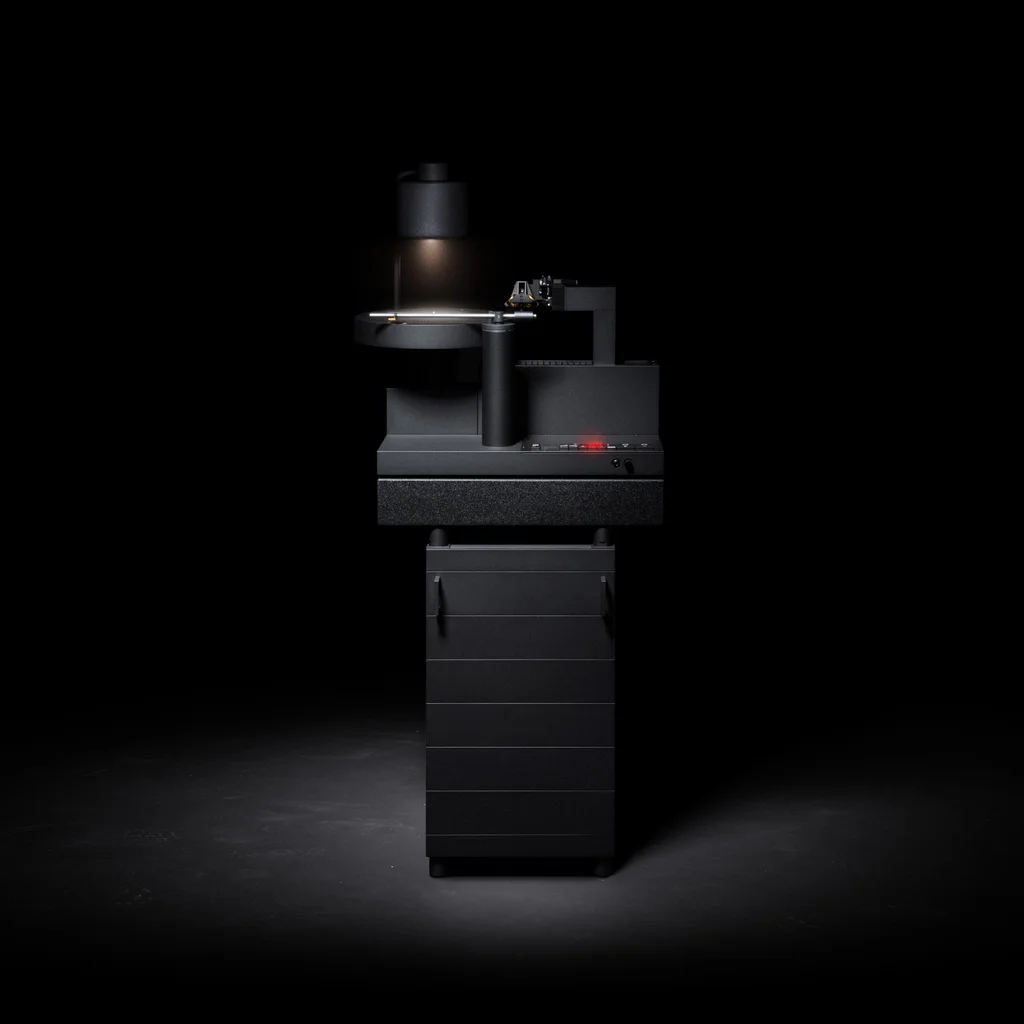
Today, while much of the tech world chases the latest AI model or cloud-native pattern, a fascinating announcement from Teenage Engineering reminds us that innovation isn't solely confined to the digital realm. Their new APC-2 professional record cutter offers a tangible link between digital creation and physical output.
The Return of the Lathe: Teenage Engineering's APC-2
Teenage Engineering, known for its distinctively designed and often unconventional synthesizers and audio gear, has unveiled the APC-2, a professional record cutter designed to produce original playback discs. This isn't a toy; it's a precision instrument aimed at enabling artists, producers, and labels to cut their own playable vinyl records with exceptional quality, bypassing traditional pressing plants.
For decades, mastering engineers have used record lathes to etch audio onto lacquer discs, which are then used to create the metal stampers for mass-produced vinyl. The APC-2 brings this high-fidelity, small-batch production capability to a new audience, merging cutting-edge engineering with the analog charm of vinyl. You can explore the details of this impressive piece of hardware on the Teenage Engineering product page.
Why This Matters for Developers
While the APC-2 is a piece of hardware, its significance for developers lies in the intersection of the physical and digital, and the workflows surrounding its use. For many developers, our work is abstract, living on servers or screens. The APC-2 represents an inverse journey: taking digital audio — bits and bytes — and transforming it into a physical, playable artifact.
This process is far from purely mechanical. The journey from a digital audio workstation (DAW) to a master vinyl disc involves a sophisticated interplay of software and hardware. Developers in audio tech, embedded systems, or even those simply fascinated by intricate tooling, can find rich lessons here:
- Hardware-Software Co-design: Products like the APC-2 often require custom firmware, control software, and calibration tools. This highlights the crucial role of developers in bridging mechanical precision with digital intelligence.
- Workflow Automation and Optimization: Preparing audio for cutting demands meticulous attention. It involves mastering, equalization, dynamic range compression, and often, specific digital signal processing (DSP) to ensure the audio translates well to the physical medium. Developers are key in building or optimizing the software tools that facilitate this complex pre-production workflow.
- Niche Tooling Development: Just as some developers build custom CLIs or scripts to automate their code deployments, audio engineers will develop custom toolchains to optimize their record cutting process. The APC-2, in essence, creates a new ecosystem for specialized software solutions.
- Bridging Creative Coding and Physical Output: For developers involved in generative music, sound art, or interactive audio experiences, a tool like the APC-2 provides a novel way to manifest digital creations into a durable, tangible form. It's about moving beyond digital playback to physical permanence.
Who's Affected and How
Directly, the APC-2 targets professional audio engineers, independent musicians, and boutique labels looking for granular control and rapid turnaround in vinyl production. However, its implications stretch further into the developer community:
- Audio Software Developers: Those working on DAWs, audio plugins, mastering suites, or DSP libraries will find renewed interest in optimizing their software for physical media production.
- Embedded Systems & IoT Developers: The precision engineering and control mechanisms within the APC-2 are akin to challenges faced in industrial automation or advanced consumer electronics, offering inspiration for designing robust hardware-software interfaces.
- Creative Technologists & Media Artists: Developers pushing the boundaries of art and technology might see the APC-2 as a tool to create unique, collectible physical editions of their digital soundscapes.
- The DIY/Maker Developer: For those who appreciate the craft of building and the satisfaction of a complete end-to-end process, the concept of cutting your own records resonates with the broader maker movement that many developers are part of.
The same spirit of creating custom tools to solve specific problems is evident in other trending topics. For instance, the Dev.to article “I got tired of waiting for deploys, so I built a local Lambda runner” highlights a developer creating a solution for a workflow bottleneck. This is precisely the mindset that drives innovation around specialized hardware like the APC-2 — identifying a need and building the necessary tools, whether software or hardware, to address it.
Practical Takeaways: Bridging Digital and Analog
For developers, the APC-2 serves as a potent reminder that the digital world doesn't exist in a vacuum. Our code often has real-world consequences, whether it's controlling a drone, powering a smart home, or, in this case, etching sound waves onto a physical medium. Here are some actionable takeaways:
Deepen Your Understanding of the Full Stack: Don't just think about frontend and backend. Consider the “hardware stack” as well. How does your digital output translate to physical reality? This interdisciplinary thinking can spark novel solutions.
Explore Audio Processing & DSP: If you've ever been curious about how sound works at a fundamental level, tools like the APC-2 highlight the practical applications of digital signal processing. Libraries exist in almost every language to manipulate audio. For example, using Python's
pydubto normalize an audio file before “mastering” it for a physical cut:from pydub import AudioSegment from pydub.silence import normalize_loudness def prepare_audio_for_cut(input_path, output_path, target_peak_db=-3.0): try: audio = AudioSegment.from_file(input_path) print(f"Original loudness: {audio.dBFS:.2f} dBFS") # Normalize loudness to a target peak level suitable for cutting # This is a simplification; true mastering involves much more. normalized_audio = normalize_loudness(audio, head_room=-target_peak_db) # A common step for vinyl is to slightly reduce bass and boost treble (RIAA curve is for playback) # For cutting, engineers might apply pre-emphasis which is usually handled by the cutting head itself # We'll just demonstrate a simple high-pass filter as a conceptual 'clean-up' # For actual cutting, this would be part of a sophisticated mastering chain # Applying a very subtle high-pass filter below typical bass frequencies for vinyl # This is illustrative; actual mastering would be very specific. # filtered_audio = normalized_audio.low_pass_filter(20000).high_pass_filter(20) normalized_audio.export(output_path, format="wav") print(f"Exported normalized audio to {output_path} with peak at around {target_peak_db} dB.") except Exception as e: print(f"Error processing audio: {e}") # Example usage (replace with your actual file) # prepare_audio_for_cut("my_digital_track.mp3", "my_mastered_for_vinyl.wav")This snippet is a very simplified illustration, as actual audio mastering for vinyl is an art and science requiring specialized software and ears. However, it demonstrates how code can be the first step in preparing digital content for an analog medium.
Embrace Custom Tooling: The APC-2 enables a bespoke production pipeline. As developers, we should always be looking for opportunities to build or integrate custom tools that streamline our unique workflows, whether it's for deploying code, processing data, or preparing creative assets.
In a world increasingly dominated by the ephemeral, the APC-2 offers a refreshing counter-narrative: the creation of something lasting and physical, underpinned by sophisticated engineering and, invariably, clever code. It's a reminder that the most exciting innovations often happen at the boundaries of disciplines.
✦ React to this post